Research Projects & Internships
Research
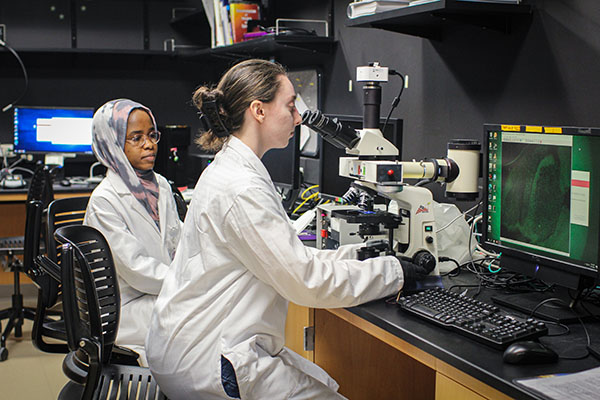
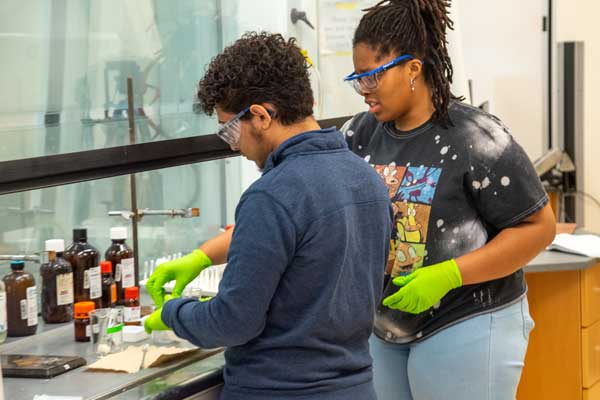
Undergraduate research is an exciting opportunity for biology students to work with faculty and experience the process of discovery. The biology faculty has developed a culture of scholarship in which students learn how to use research to strengthen their understanding of biological concepts. Undergraduate research is actively encouraged throughout the students' curriculum to invigorate learning.
Nazareth students have completed research investigations in a variety of areas including genetics, developmental biology, ecology, microbiology, animal physiology, and plant biology.
A six-week summer research program with faculty is offered during the Summer A term, roughly 24 hours per week (defined by the faculty mentor), and pays a stipend. There is a competitive application process and summer research students commit to continue the research in the fall semester.
Recent Projects
Amphibian Biodiversity
Faculty mentor: Patrick Garrett, Ph.D.
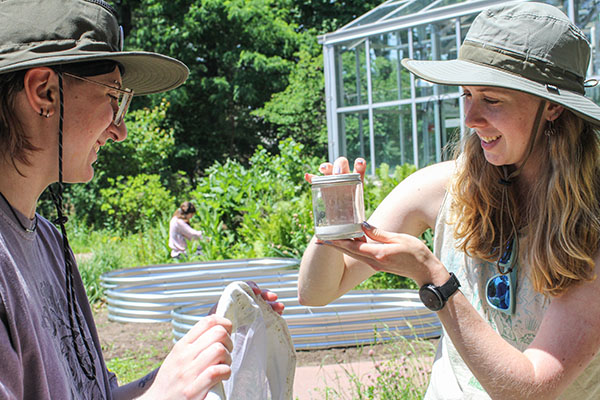
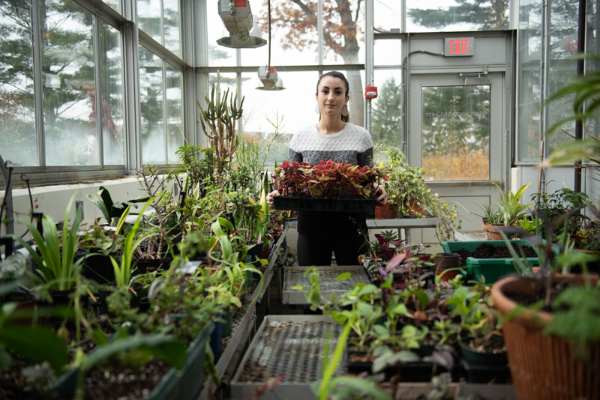
Our research group broadly investigated ecological processes, with a specific emphasis on plant biology, amphibian conservation, and sustainable agricultural systems. We focused on monitoring amphibian biodiversity within the Robert Corby Arboretum and Wildlife Sanctuary in the Village of Pittsford. This study utilizes a series of man‑made vernal pools established in April 2025 to track early-stage colonization patterns, species assemblages, and habitat use by local amphibian communities. We also conducted a native pollinator survey on and around the Nazareth University campus. This aspect of our research utilized pan trapping and netting to define the patterns of pollinator biodiversity in the local area.
Gene Immunology
Faculty mentor: Tina Nedelkovska, Ph.D.
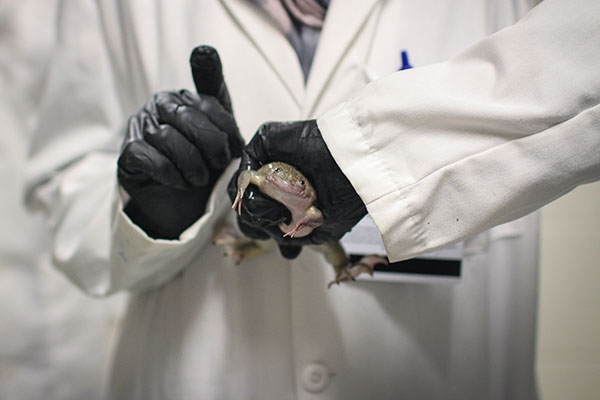
Dr. Nedelkovska's research focused on immunologically relevant genes in the frog Xenopus laevis. Xenopus is an important immunological model used to study the evolution of the immune system as well tumor and viral immune responses. More specifically, we looked at gene expression as well as use a powerful genome editing system, CRISPR/Cas9, which will allowed us to knock out genes in the Xenopus genome. This summer we selected specific target genes, determine their expression and designed guide RNAs that targeted our genes of interest. These guide RNAs will be further used to create transgenic Xenopus embryos. Students learned about comparative immunology and used different methods in molecular biology.
African Sleeping Sickness
Faculty mentor: Kaylen Ohira, Ph.D.
Dr. Ohira's research group investigated a deadly parasite. Trypanosoma brucei is the causative agent of African Sleeping Sickness in humans and Nagana in cattle. African Sleeping Sickness is 100% fatal without treatment. T. brucei is an early diverging eukaryotic organism with unique biological phenomena. The team used a variety of biochemical techniques to explore how proteins behave in the parasite. Students learned cloning, mutational analysis, recombinant protein purification, and both qualitative and quantitative binding assays.
Asymmetric Cellular Mechanisms
Faculty mentor: Alin Vonica, Ph.D.
Xenopus laevis (South African clawed frog) embryos are an ideal organism for the study of conserved cellular and molecular mechanisms involved in determining the left-right internal organization of vertebrates. We used diverse molecular and cell biology techniques commonly used in research labs and biotech (DNA and RNA work, gene expression, cell imaging of live and immunostained embryos). Students have presented posters and short talks at regional (NESDB Meeting, Woods Hole, MA), state (NYDB Undergraduate Meeting, Ithaca NY) and local (Rochester Academy of Sciences) levels. During summer 2026, in a friendly and relaxed environment, we explore the molecular mechanisms behind asymmetric cell divisions and a novel oscillating signal, which we have previously connected to left-right asymmetry.
Snake evolutionary history and ecology
Faculty mentor: Jacob McCartney, Ph.D.
Students have studied a partially articulated snake skeleton from 29 million years ago (lower Oligocene) in the Fayum Depression of Egypt and have presented their work. Emily Rolince ‘27 (environmental science and sustainability) and Catherine Zak ’26 (biology) with their advisor attended the 2025 annual meeting of the Society of Vertebrate Paleontology in Birmingham, UK. In addition to presenting their research, they spoke with experts in the field and received useful feedback on their work. The conference offered paleontological lectures, poster sessions, networking time, and professional-development workshops that helped the students consider options after graduation. The trip was funded by the Biology Department and the Undergraduate Association at Nazareth University.
Honor Society
Nazareth's Nu Alpha Zeta chapter of Beta Beta Beta (TriBeta) honor society for undergraduates is dedicated to improving the understanding and appreciation of biological study and extending boundaries of human knowledge through scientific research.
Advisor: Kaylen Ohira, Ph.D.
Resources
- Biology internships around the country
- Pathways to Science (database for research positions)
- American Association for the Advancement of Science
- UR Summer Scholars Program
- U. Buffalo Summer Undergraduate Research Experience
- RIT Life Sciences list
- National Science Foundation list
- Centers for Disease Control and Prevention
- Monroe County Health Department
- NY Dept. of Environmental Conservation
Internships
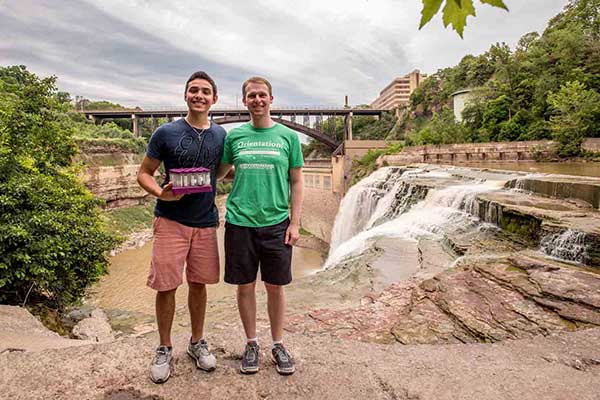
For more information on internships at Naz, contact the Internships office or the Biology department faculty and staff.
Recent Internships
Masonic Medical Research Institute
Angelina Tangorra (biology, toxicology) was a summer research fellow in the Lin Lab at MMRI in Utica, NY. She investigated the neurological toxicity of the SARS-CoV-2 spike protein through various behavior tests on transgenic mice. She assessed the changes in cognitive ability as a result of the presence of the spike protein in the body. This internship allowed Angelia to vastly expand her knowledge of molecular biology and her skill set in the laboratory. She is grateful for the opportunities she has had to do research at Nazareth, which was essential preparation for this internship.
Rochester Animal Services
While working as a shelter assistant, Ozzy Brooks (BMS) gained knowledge of animal care, infection control, and how the local community outreach programs are structured and carried out.
MKS, Inc.
As an environmental health and safety intern at MKS, Inc. in Rochester, NY, Jennifer Beaver (toxicology) worked on a variety of occupational safety projects, including a handout on ESD safe cups, updating first aid lists, creating and reviewing job safety assessments, and working to align the environmental health and safety orientation slideshow for the company's British Columbia site. She says the best part of her internship was the opportunity to reach out to EPA and NYSDEC employees to gain clarification on previous audits and standards.
North County Land Trust
The goal of North County Land Trust in Leominster, MA is to connect people to natural places by conserving open land and creating outdoor experiences in north central Massachusetts. Kaarina Pera (environmental science & sustainability) participated in this internship as part of a career exploration Spark Grant opportunity.